


- By Admin
- Star Interiors Private Limited
How to Choose the Right Warehouse Racking System for Heavy Loads in India
Warehouses in India are evolving rapidly. From eCommerce fulfillment centers to industrial manufacturing units, businesses are handling larger inventories, heavier products, and tighter storage demands than ever before.
But here’s the challenge — not every storage setup can safely manage heavy inventory loads.
Choosing the wrong racking solution can lead to:
- Poor warehouse efficiency
- Product damage
- Safety hazards
- Space wastage
- Higher operational costs
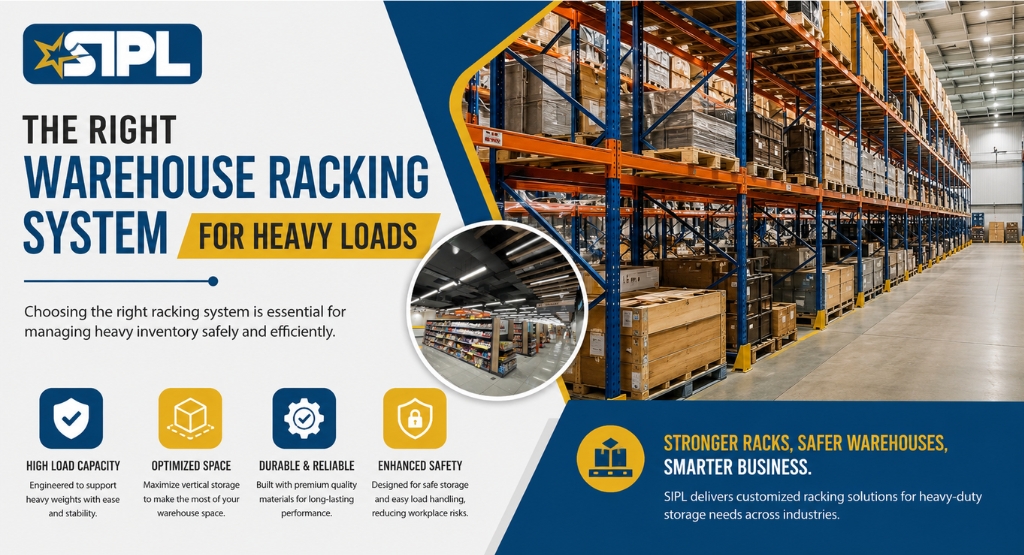
That’s why selecting the right warehouse racking system for heavy loads is critical for businesses that want long-term operational efficiency and warehouse safety.
At Star Interior Rack, businesses across India trust customized storage solutions designed for strength, durability, and optimized space utilization.
What Is a Warehouse Racking System for Heavy Loads?
A heavy-duty warehouse racking system is a storage structure designed to support high-weight inventory safely while maximizing vertical and horizontal warehouse space.
These systems are commonly used in:
- Industrial warehouses
- Logistics hubs
- Manufacturing plants
- Automotive storage
- Retail distribution centers
- FMCG warehouses
Why Is Heavy-Duty Racking Important?
A warehouse racking system for heavy loads improves storage capacity, operational safety, inventory accessibility, and warehouse efficiency while reducing product handling risks.
Why Choosing the Right Racking System Matters
A warehouse racking system directly affects:
- Material handling speed
- Worker safety
- Inventory management
- Expansion capability
- Operational productivity
In India, where warehouse space costs continue to rise, efficient racking systems help businesses maximize every square foot without compromising safety.
Types of Warehouse Racking Systems for Heavy Loads
Different warehouses require different storage solutions depending on product type, weight, and operational flow.
1. Selective Pallet Racking
This is one of the most widely used systems for easy pallet access.
Best For:
- Fast-moving inventory
- Multiple SKUs
- Warehouses requiring direct pallet access
Benefits:
- Cost-effective
- Flexible layout
- Easy installation
- Compatible with forklifts
2. Drive-In Racking Systems
Drive-in racks allow forklifts to enter storage lanes directly.
Best For:
- Bulk storage
- Limited SKU operations
- Cold storage warehouses
Benefits:
- High-density storage
- Better space optimization
- Reduced aisle requirements
3. Cantilever Racking
Cantilever racks are ideal for long or oversized materials.
Best For:
- Pipes
- Steel rods
- Timber
- Heavy furniture
Benefits:
- Easy loading and unloading
- Strong load-bearing capacity
- Flexible arm configurations
4. Heavy-Duty Mezzanine Systems
These systems create additional storage levels within the same warehouse.
Best For:
- Expanding warehouse capacity
- Multi-level inventory management
Benefits:
- Better vertical space usage
- Increased storage without relocation
- Improved operational efficiency
How to Choose the Right Warehouse Racking System for Heavy Loads
Selecting the right system involves more than just weight capacity.
1. Understand Load Requirements
The first step is identifying:
- Product weight
- Pallet dimensions
- Load distribution
- Storage frequency
Overloading racks beyond design capacity can cause severe structural failures.
2. Analyze Warehouse Layout
Your warehouse dimensions affect rack selection.
Consider:
- Ceiling height
- Floor load capacity
- Aisle width
- Forklift movement
- Fire safety clearance
A professionally designed layout improves workflow and reduces congestion.
3. Consider Inventory Movement
Ask these questions:
- Is inventory fast-moving or slow-moving?
- Do you use FIFO or LIFO inventory methods?
- How often are pallets accessed?
For example:
- FIFO works well with pallet flow systems
- LIFO suits drive-in racks
4. Check Material Quality and Durability
Heavy-load storage systems must use:
- High-grade steel
- Corrosion-resistant coating
- Precision welding
- Industrial-quality finishes
Reliable manufacturers focus on structural integrity and long-term durability.
At Star Interior Rack, quality-focused engineering and customization ensure racks can handle demanding industrial environments efficiently.
What Are the Benefits of Heavy-Duty Warehouse Racking?
Improved Space Utilization
Vertical storage increases warehouse capacity without increasing rental costs.
Better Inventory Management
Organized racks improve inventory tracking and operational speed.
Enhanced Safety
Strong racking systems reduce collapse risks and improve workplace safety.
Faster Material Handling
Efficient layouts improve loading, unloading, and picking operations.
Scalability
Modern racking systems can expand as business storage needs grow.
Common Mistakes Businesses Make When Choosing Racking Systems
Ignoring Future Expansion
Many businesses install racks based only on current inventory needs.
A scalable system prevents expensive redesigns later.
Choosing Low-Cost Over Quality
Cheap racks often compromise:
- Structural strength
- Safety standards
- Durability
Investing in quality reduces long-term maintenance costs.
Poor Warehouse Planning
Improper aisle spacing and rack placement reduce operational efficiency.
Professional planning improves warehouse flow significantly.
Overlooking Safety Compliance
Heavy-load racks should comply with industrial safety standards and load testing requirements.
How Supermarket Shelving Design Connects to Warehouse Efficiency
Many businesses managing retail supply chains overlook the relationship between warehouse operations and supermarket shelving design.
A well-planned warehouse storage system supports:
- Faster retail replenishment
- Better inventory rotation
- Improved product accessibility
Retail businesses using optimized warehouse systems can streamline supply chain performance from storage to store display.
Best Practices for Heavy-Load Warehouse Storage
Conduct Regular Rack Inspections
Routine inspections help identify:
- Bent frames
- Loose bolts
- Load imbalance
- Corrosion damage
Use Proper Material Handling Equipment
Forklift compatibility is essential for safe warehouse operations.
Train Warehouse Staff
Improper loading practices can weaken rack structures over time.
Work With Experienced Manufacturers
Experienced storage solution providers understand:
- Industry-specific requirements
- Safety compliance
- Custom load calculations
- Space optimization strategies
This is where Star Interior Rack stands out with reliable support, tailored solutions, and durable warehouse infrastructure systems for Indian businesses.
Why Indian Businesses Are Upgrading to Modern Racking Systems
India’s warehousing sector is growing rapidly due to:
- eCommerce expansion
- GST-driven logistics optimization
- Manufacturing growth
- Retail modernization
As storage demands increase, businesses require smarter and safer heavy-duty racking solutions to stay competitive.
Modern warehouses now prioritize:
- Automation readiness
- Vertical storage optimization
- Inventory accuracy
- Faster fulfillment operations
Conclusion
Choosing the right warehouse racking system for heavy loads is not just about storage — it’s about improving warehouse productivity, safety, and long-term business efficiency.
The ideal solution depends on:
- Load capacity
- Warehouse layout
- Inventory movement
- Expansion plans
- Operational goals
Businesses that invest in quality racking systems gain better space utilization, smoother workflows, and stronger operational reliability.
With customized solutions, durable materials, industry expertise, and dependable support, Star Interior Rack helps businesses across India build efficient and future-ready warehouse storage systems.
How to Choose the Right Warehouse Racking System for Heavy Loads in India
Warehouses in India are evolving rapidly. From eCommerce fulfillment centers to industrial manufacturing units, businesses are handling larger inventories, heavier s, and tighter storage demands than ever before.
But here’s the challenge — not every storage setup can safely manage heavy inventory loads.
Choosing the wrong racking solution can lead to:
- Poor warehouse efficiency
- Product damage
- Safety hazards
- Space wastage
- Higher operational costs
That’s why selecting the right warehouse racking system for heavy loads is critical for businesses that want long-term operational efficiency and warehouse safety.
At Star Interior Rack, businesses across India trust customized storage solutions designed for strength, durability, and optimized space utilization.
What Is a Warehouse Racking System for Heavy Loads?
A heavy-duty warehouse racking system is a storage structure designed to support high-weight inventory safely while maximizing vertical and horizontal warehouse space.
These systems are commonly used in:
- Industrial warehouses
- Logistics hubs
- Manufacturing plants
- Automotive storage
- Retail distribution centers
- FMCG warehouses
Why Is Heavy-Duty Racking Important?
A warehouse racking system for heavy loads improves storage capacity, operational safety, inventory accessibility, and warehouse efficiency while reducing handling risks.
Why Choosing the Right Racking System Matters
A warehouse racking system directly affects:
- Material handling speed
- Worker safety
- Inventory management
- Expansion capability
- Operational ivity
In India, where warehouse space costs continue to rise, efficient racking systems help businesses maximize every square foot without compromising safety.
Types of Warehouse Racking Systems for Heavy Loads
Different warehouses require different storage solutions depending on type, weight, and operational flow.
1. Selective Pallet Racking
This is one of the most widely used systems for easy pallet access.
Best For:
- Fast-moving inventory
- Multiple SKUs
- Warehouses requiring direct pallet access
Benefits:
- Cost-effective
- Flexible layout
- Easy installation
- Compatible with forklifts
2. Drive-In Racking Systems
Drive-in racks allow forklifts to enter storage lanes directly.
Best For:
- Bulk storage
- Limited SKU operations
- Cold storage warehouses
Benefits:
- High-density storage
- Better space optimization
- Reduced aisle requirements
3. Cantilever Racking
Cantilever racks are ideal for long or oversized materials.
Best For:
- Pipes
- Steel rods
- Timber
- Heavy furniture
Benefits:
- Easy loading and unloading
- Strong load-bearing capacity
- Flexible arm configurations
4. Heavy-Duty Mezzanine Systems
These systems create additional storage levels within the same warehouse.
Best For:
- Expanding warehouse capacity
- Multi-level inventory management
Benefits:
- Better vertical space usage
- Increased storage without relocation
- Improved operational efficiency
How to Choose the Right Warehouse Racking System for Heavy Loads
Selecting the right system involves more than just weight capacity.
1. Understand Load Requirements
The first step is identifying:
- Product weight
- Pallet dimensions
- Load distribution
- Storage frequency
Overloading racks beyond design capacity can cause severe structural failures.
2. Analyze Warehouse Layout
Your warehouse dimensions affect rack selection.
Consider:
- Ceiling height
- Floor load capacity
- Aisle width
- Forklift movement
- Fire safety clearance
A professionally designed layout improves workflow and reduces congestion.
3. Consider Inventory Movement
Ask these questions:
- Is inventory fast-moving or slow-moving?
- Do you use FIFO or LIFO inventory methods?
- How often are pallets accessed?
For example:
- FIFO works well with pallet flow systems
- LIFO suits drive-in racks
4. Check Material Quality and Durability
Heavy-load storage systems must use:
- High-grade steel
- Corrosion-resistant coating
- Precision welding
- Industrial-quality finishes
Reliable manufacturers focus on structural integrity and long-term durability.
At Star Interior Rack, quality-focused engineering and customization ensure racks can handle demanding industrial environments efficiently.
What Are the Benefits of Heavy-Duty Warehouse Racking?
Improved Space Utilization
Vertical storage increases warehouse capacity without increasing rental costs.
Better Inventory Management
Organized racks improve inventory tracking and operational speed.
Enhanced Safety
Strong racking systems reduce collapse risks and improve workplace safety.
Faster Material Handling
Efficient layouts improve loading, unloading, and picking operations.
Scalability
Modern racking systems can expand as business storage needs grow.
Common Mistakes Businesses Make When Choosing Racking Systems
Ignoring Future Expansion
Many businesses install racks based only on current inventory needs.
A scalable system prevents expensive redesigns later.
Choosing Low-Cost Over Quality
Cheap racks often compromise:
- Structural strength
- Safety standards
- Durability
Investing in quality reduces long-term maintenance costs.
Poor Warehouse Planning
Improper aisle spacing and rack placement reduce operational efficiency.
Professional planning improves warehouse flow significantly.
Overlooking Safety Compliance
Heavy-load racks should comply with industrial safety standards and load testing requirements.
How Supermarket Shelving Design Connects to Warehouse Efficiency
Many businesses managing retail supply chains overlook the relationship between warehouse operations and supermarket shelving design.
A well-planned warehouse storage system supports:
- Faster retail replenishment
- Better inventory rotation
- Improved accessibility
Retail businesses using optimized warehouse systems can streamline supply chain performance from storage to store display.
Best Practices for Heavy-Load Warehouse Storage
Conduct Regular Rack Inspections
Routine inspections help identify:
- Bent frames
- Loose bolts
- Load imbalance
- Corrosion damage
Use Proper Material Handling Equipment
Forklift compatibility is essential for safe warehouse operations.
Train Warehouse Staff
Improper loading practices can weaken rack structures over time.
Work With Experienced Manufacturers
Experienced storage solution providers understand:
- Industry-specific requirements
- Safety compliance
- Custom load calculations
- Space optimization strategies
This is where Star Interior Rack stands out with reliable support, tailored solutions, and durable warehouse infrastructure systems for Indian businesses.
Why Indian Businesses Are Upgrading to Modern Racking Systems
India’s warehousing sector is growing rapidly due to:
- eCommerce expansion
- GST-driven logistics optimization
- Manufacturing growth
- Retail modernization
As storage demands increase, businesses require smarter and safer heavy-duty racking solutions to stay competitive.
Modern warehouses now prioritize:
- Automation readiness
- Vertical storage optimization
- Inventory accuracy
- Faster fulfillment operations
Conclusion
Choosing the right warehouse racking system for heavy loads is not just about storage — it’s about improving warehouse ivity, safety, and long-term business efficiency.
The ideal solution depends on:
- Load capacity
- Warehouse layout
- Inventory movement
- Expansion plans
- Operational goals
Businesses that invest in quality racking systems gain better space utilization, smoother workflows, and stronger operational reliability.
With customized solutions, durable materials, industry expertise, and dependable support, Star Interior Rack helps businesses across India build efficient and future-ready warehouse storage systems.